Ivan Yakovlevitch’s Attempt to Dispose of the Nose
The NoseIvan Yakovlevitch’s attempt to dispose of the nose turns a panicked effort to rid himself of incriminating evidence into a sequence of thwarted evasions. He wraps the severed nose in cloth, tries to lose it in public, and finally throws it into the Neva from the Isaac Bridge. His relief is abruptly checked by a police inspector, while the narration breaks off before explaining what happens next; the episode’s comic uncertainty leaves the nose’s fate unresolved at the very moment Ivan believes he has escaped it.
The Barber and the Burden
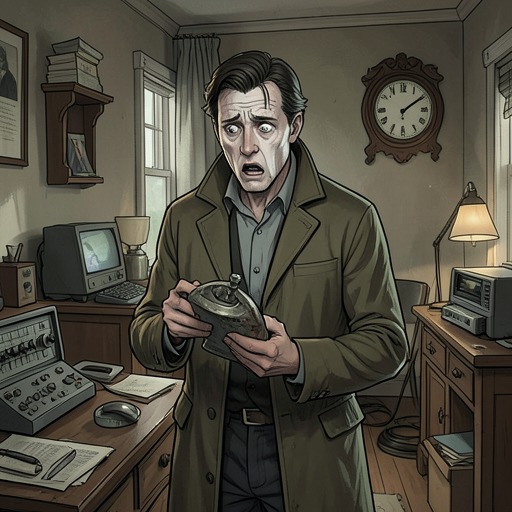
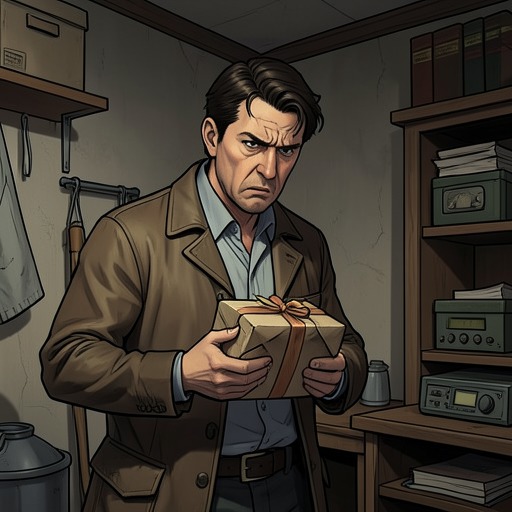
The episode begins after Ivan has discovered the nose and stood bewildered, unable to make sense of its presence in a loaf. His fear is not only that this impossible object exists, but that the police may find him in unlawful possession of it and arrest him. He imagines the red collar with silver braid and the sword associated with an officer, and trembles. Once dressed, he follows his wife’s emphatic exhortations, wraps the nose in a cloth, and goes out into the street.
Ivan’s established character gives the attempted disposal a deliberately comic setting. He is described as a heavy drinker and a cynic, a barber whose own face is habitually unshaven and whose worn coat has lost its buttons. His ordinary relations with Platon Kovaloff are already marked by irritation: when Kovaloff complains that Ivan’s hands smell, Ivan answers with a question and retaliates by soaping Kovaloff’s face. The man now trying to conceal a nose is thus not presented as a composed investigator, but as an untidy tradesman reacting to a problem he cannot explain and fears the authorities will interpret as a crime.
A Plan Repeatedly Thwarted
Ivan intends to abandon the wrapped nose somewhere—a doorway, a public square, or a narrow alley. The plan depends on finding an unobserved instant, but an acquaintance recognizes him and calls out, asking whom he is going to shave so early in the morning. The interruption leaves him no suitable opportunity. When he later lets the nose drop, a sentry approaches with a halberd and warns him that he has dropped something. Ivan has to pick it up and put it back in his pocket.
The failed drop reverses the purpose of an ordinary warning: the sentry’s intervention restores to Ivan the very burden he had tried to shed. As the streets grow busier and merchants begin opening their shops, concealment becomes harder rather than easier. Ivan’s despair increases with the crowd, and he abandons the idea of an accidental loss in favor of a more deliberate attempt at the Isaac Bridge, where he hopes to throw the nose into the Neva.
The Toss from the Isaac Bridge
At the bridge, Ivan first looks around and leans over the railings as if watching for fish. The appearance of casual curiosity masks the action he is preparing: he secretly drops the nose, still wrapped in its small piece of cloth, into the water. The gesture succeeds where the earlier attempt did not. Ivan feels as though a ton weight has been lifted from him and laughs cheerfully, treating the disposal as an escape from the threat of discovery.
His immediate next intention is to turn from his barber’s work and go into a building advertising tea, where he can have a glass of punch. That mundane errand makes the reversal sharper: he has just rid himself of an impossible piece of evidence and is ready to resume an ordinary morning. But before he can do so, he sees a police inspector at the other end of the bridge. The inspector’s imposing whiskers, three-cornered hat, and sword make the authority Ivan has feared suddenly present in person. He nearly faints when beckoned over.
Interrogation and Narrative Break
Ivan takes off his hat and approaches with the politeness he believes appropriate to a gentleman, greeting the inspector and wishing him good health. The inspector dismisses the greeting and asks why Ivan was standing on the bridge. Ivan claims he was on his way to customers and had only looked down to see whether the river was flowing quickly. The inspector calls this a lie and orders him to confess. Ivan responds by offering to shave the inspector two or three times a week for free, an attempt to turn a direct inquiry into a negotiation over his barbering services.
The inspector refuses the offer: three barbers are already busy with him, and he considers their work an honor. He returns to the question of what Ivan was doing at the bridge. Ivan grows pale. At that point the narrator says the strange episode vanishes into mist and that what happened afterward is not known. This abrupt withholding prevents the scene from confirming either an arrest or a successful escape. Ivan’s apparent relief at the water’s edge is therefore countered by the inspector’s arrival and by the story’s refusal to settle the consequences.
Comic Logic and Consequences
The episode’s progression is built from repeated near-successes. Ivan wants to abandon the nose, but a greeting interrupts him; he drops it, but the sentry makes him retrieve it; he finally throws it into the river, but the inspector’s summons immediately subjects his conduct to scrutiny. Each attempt brings the problem closer to resolution only to return it in a changed form: first as an object in his pocket, then as a suspicious act on a public bridge, and finally as an unanswered question in the narrative.
The nose’s physical absurdity is paired with a recognizable fear of official power. Ivan does not know how the nose came to be in his possession, yet imagines that possession itself could expose him to arrest. His imagined signs of authority—the red collar and sword—are followed by the real inspector’s sword and uniformed presence. The plot does not explain the nose or reveal the outcome of the interrogation; instead, it makes the ordinary procedures of street encounter, public observation, and police questioning carry the suspense. The episode ends not with a confirmed disposal, but with Ivan pale before an authority figure and the story deliberately withholding what comes next.